The
city
of
New
Orleans
is
famous
for
the
way
it
treats
the
dead.
Jazz
funerals,
rowdy
wakes,
and
dramatic,
traffic-stopping
corteges
for
even
the
anonymous
dead
are
a
matter-of-fact
realtiy
in
the
Crescent
City.
But
New
Orleans
is
perhaps
most
well-known
for
the
edifices
of
eternal
rest
it
provides
to
its
dead,
the
famous
above-ground
tombs.
Lying
well
below
sea
level,
the
location
of
New
Orleans
has
provided
many
challenges
to
both
the
living
and
the
dead.
Levee
systems
are
in
place
to
shield
the
city
from
the
ever-encroaching
wetlands
and
the
currents
of
the
Mississippi
River,
but
no
such
system
can
be
devised
to
keep
the
abnormally
high
water
table
from
seeping
up
and
into
the
graves
of
the
uneasy
dead.
In
the
18th
and
19th
centuries,
some
New
Orleans
cemeteries
were
nothing
more
than
festering
swamps
with
the
putrefied
remains
of
interred
loved
ones
literally
pushed
out
of
their
graves
by
rising
waters.
New
Orleans
in-ground
burials
were
never
very
deep,
because
only
a
few
feet
of
digging
would
generate
a
swampy
mire
in
which
the
hapless
coffin
would
literally
float
around.
Early
efforts
to
prevent
the
coffins
from
leaking
up
through
the
soil
included
drilling
holes
into
the
coffins
or
placing
heavy
stones
inside
with
the
corpses
or
on
top
of
the
coffin
lid
to
help
it
settle
into
place.
Naturally,
New
Orleanians
of
the
time
didn't
like
being
revisited
by
their
dead
relatives,
and
those
of
everyone
else,
in
such
an
unpredictable
and
offensive
manner,
and
thus
several
solutions
were
proposed.
Ultimately
it
became
apparent
that
the
above-ground
vault,
similar
to
those
found
in
Spain,
and
mausoleums
of
"oven"
vaults
were
the
most
effective
guarantee
for
keeping
the
dead
put.
Now
New
Orleans
is
synonymous
with
these
above-ground
resting
places
which
have
been
dubbed
the
"Cities
of
the
Dead."
There
are
approximately
thirty
such
"Cities"
located
around
New
Orleans,
and
a
short
trip
to
any
one
of
these
will
provide
a
world
of
information
to
any
visitor.
From
the
simplistic,
decaying
oven
vaults
made
of
simple
plaster
and
brick,
and
these
days
no
longer
big
enough
to
receive
a
casket,
to
the
elaborate
death
memorials
full
of
images
of
Grecian
gods
and
Christian
saints.
Not
surprisingly
some
of
the
most
interesting
burials
are
found
in
the
oldest
of
these
Cities
of
the
Dead.
Perhaps
the
most
famous
and
most
visited
is
the
tomb
of
legendary
New
Orleans
Voodoo
Queen,
Marie
Laveau.
Located
in
St.
Louis
No.
1,
on
Rampart
St.
facing
the
old
Quarter,
Marie
Laveau's
tomb
probably
ranks
as
the
top
tourist
destination
in
the
city.
Evidence
of
her
loyal
followers
can
still
be
found
in
offerings
of
votive
candles,
cigars,
Florida
water,
lucky
Monkey
and
Cock
talismans,
and
other
personal
items
which
clutter
the
steps
and
bricks
around
her
famous
resting
place.
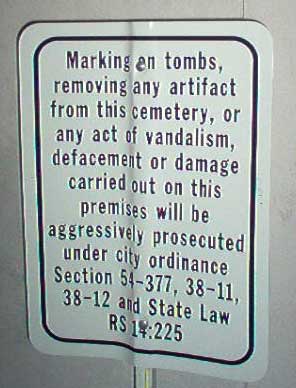
Followers
leave
their
mark,
too,
carving
a
large
"X"
to
convey
their
wish
to
the
sleeping
Queen,
whose
presence,
they
feel,
is
very
real.
It
is
said
that
one
who
marks
the
tomb
and
turns
round
in
place
three
times
before
it,
will
receive
their
wish
before
the
next
full
moon.
MORE
ON:
St.
Louis
Cemetery
Number
1.
HERE.
But
there
are
other
famous
residents
in
the
Cities
of
the
Dead.
Not
far
from
Marie
Laveau
is
the
purported
resting
place
of
the
brother
of
famous
pirate
Jean
Lafitte;
and
in
this
cemetery
was
found
the
only
evidence
of
the
actual
fate
of
the
infamous
Madame
LaLaurie.
A
single
plaque
marking
her
birth
and
alleged
death
in
the
Paris
was
found
propped
against
the
wall
of
one
of
the
old
oven
vaults.
Whether
the
remains
of
the
notorious
LaLaurie
are
somewhere
in
this
cemetery,
we
will
probably
never
know.
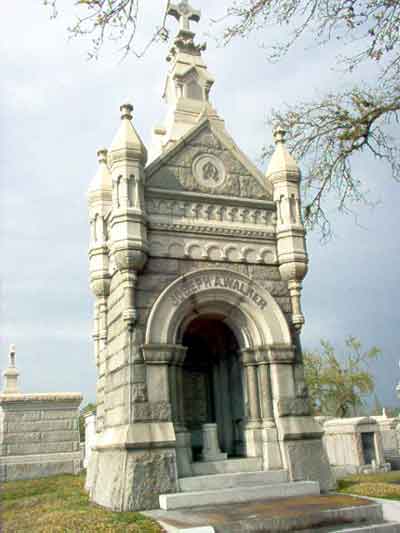
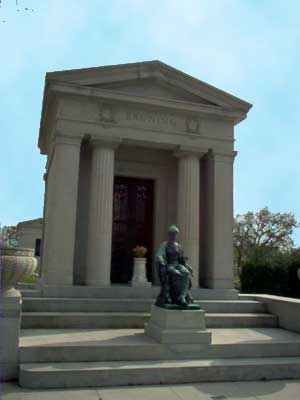
For
grandeur
on
a
European
scale
nothing
can
compare
to
Old
Metairie
Cemetery.
Founded
in
the
1800's
on
the
remains
of
a
former
horse
racing
track,
the
cemetery
soon
became
the
repository
of
the
wealthy
and
storied
dead
of
New
Orleans
and
the
suburban
city
of
Metairie.
Here
can
be
found
Civil
War
generals
and
soldiers,
philanthropists,
architects,
and
even
the
more
recently
famous
such
as
singer
Louis
Prima,
and
the
infamous
such
as
the
Storyville
Madame
who
is
said
to
still
wander
the
streets
of
this
City
of
the
Dead
in
search
of
her
original
tomb.
New
Orleans
is
dotted
with
many
other
well-known
Cities
of
the
Dead,
one
of
which
is
Lafayette
Cemetery
No.
1,
made
famous
in
the
writings
of
Vampire
novelist
Anne
Rice.
Many
of
the
tombs
described
in
her
Vampire
Chronicles
and
the
Chronicles
of
the
Mayfair
Witches
still
can
be
seen
in
this
most
famous
cemetery.
Many
others,
"buried"
among
the
gables
of
the
historic
districts
of
the
city,
are
small
and
significant
as
places
serving
the
community
for
hundreds
of
years.
Others,
with
stories
of
religious
miracles
and
healing's
attached
to
them
(such
as
St.
Roch
Cemetery)
still
host
hordes
of
faithful
visitors
who
come
to
care
for
the
graves
of
long,
lost
loved
ones
and
ancestors
now
turned
to
dust.
Metairie
is
entered
in
the
National
Register
of
Historic
Places.
It
contains
diverse
cemetery
architecture,
including
a
Roman
temple,
an
Egyptian
Revival
tomb,
and
the
memorials
of
the
Army
of
Tennessee
and
the
Army
of
Northern
Virginia.