THE
GHOST OF THE CHICKEN
MAN WALKS THE STREETS
OF POST-KATRINA NEW
ORLEANS
CHICKEN
MAN
Witnesses
Claim
The Ghost
0f The
Chicken
Man The
True King
Of New
Orleans
Voodoo
Is haunting
The French
Quarter.
It
began
to surface
slowly,
as people
came back
in twos
and threes
to live
in the
French
Quarter,
the beating
heart
of a city
that had
been abandoned
to the
ravages
of Hurricane
Katrina;
and it
was not
among
the locals
that the
talk began.
“Oh,
I just
saw the
most realistic
voodoo
man!”
said the
FEMA worker
to a group
of her
other
friends
inside
Pat O’Brien’s
main bar.
These
days it
isn’t
uncommon
to see
New Orleans
bars brimming
with FEMA
and other
recovery
and reconstruction
personnel.
With the
lack of
tourists,
these
have been
the main
customers
in the
once busy
bars and
clubs
that are
bringing
the Quarter
back to
life
“I
saw him
down there,”
she said,
pointing
over her
shoulder
in the
direction
of Bourbon
Street.
“He
came over
to me,”
she chuckled
when they
chided
her for
hooking
up with
a colorful
local
stranger.
“He
walked
over to
me and
stopped
me. He
said he
knew what
I needed
and he
gave me
this green
bag.”
With that
she pulled
out a
little
green
mojo bag
and all
her friends
recoiled
in horror,
not because
they recognized
anything
about
the bag
immediately,
but mostly
at the
sight
of the
gnarled,
black
chicken
claw tied
around
it.
“Ewww!”
said one
of the
group.
“That’s
disgusting!”
said another.
As the
women
stood
by laughing
at the
little
bag they
were overheard
by one
of Pat’s
longtime
doormen.
He came
over and
said,
quietly,
“Say,
where’d
you get
that mojo
bag, ma’am?”
And when
he heard
the woman’s
story,
that she
had got
it from
a voodoo
man on
Bourbon
Street,
and when
he asked
her to
describe
what the
man looked
like,
Nathan
the doorman
just about
fell down.
“That’s
The Chicken
Man!”
he said,
eyes wide
and staring.
He handled
the little
bag gingerly.
“You
just met
up with
The Chicken
Man!”
At this
the women
all laughed
again.
“Chicken
Man!”
said the
woman
with the
mojo bag.
“You’d
figure
the only
voodoo
man I
meet and
he’s
called
Chicken
Man!”
But as
they slowly
became
aware
of the
blood
draining
from the
curious
doorman’s
face,
they fell
quiet
again.
“What
about
Chicken
Man?”
cackled
one of
the women.
“Well,”
the doorman
replied,
“it
can’t
be Chicken
Man you
saw! Chicken
Man’s
been dead
now for
years!
Ain’t
nobody
like him
on Bourbon
Street
nowadays.
If he
gave you
that mojo
bag, I’d
make sure
I NEVER
lose that
thing!”
DOES
HE WALK
AMONG
US?
He
called
himself
“Prince
Ke’eyama”
and
he
was
acknowledged
far
and
wide
as
the
One
True
King
of
New
Orleans
Voodoo,
but
most
locals
knew
him
only
as
“The
Chicken
Man.”
As
a
young
man,
Prince
traveled
widely,
visiting
communities
in
other
states
where
the
ancient
voodoo
beliefs
were
practiced.
He
also
returned
to
Haiti
several
times
where
his
powers
were
increased
and
his
reputation
similarly
grew.
During
the
turbulent
years
of
the
early
1970’s,
Prince
Ke’eyama
returned
to
New
Orleans
and
settled
there.
He
observed
the
chaos
all
around
him
and
immediately
knew
the
cause:
so
many
around
him
were
in
trouble
with
drugs,
he
realized
he
had
found
his
calling
and
began
to
use
all
his
powers
to
help
these
desperate
individuals.
Prince
Ke’eyama
determined
that
the
best
way
to
gain
their
trust
and
attract
their
attention
was
to
create
a
sensation
of
himself:
this
is
when
The
Chicken
Man
was
born.
After
gaining
fame
with
his
admittedly
strange
nightclub
act,
Prince
was
able
to
open
a
venue
of
his
own.
Called
“Chicken
Man’s
House
of
Voodoo,”
the
shop
was
located
in
the
700
block
of
Bourbon
Street
where
it
immediately
became
a
landmark
among
the
local
voodoo
community.
When
Prince
Ke’eyama
married,
his
wife
Bobby
Ke’eyama,
known
as
The
Chicken
Woman,
would
manage
the
shop
leaving
The
Chicken
Man
free
to
seek
out
and
help
those
who
needed
him
among
the
French
Quarter
crowds.
He
soon
became
a
familiar
figure
around
the
Quarter
selling
his
gris-gris
bags
and
incense,
doing
readings
for
next
to
nothing
or
sometimes
free,
if
the
person
he
chose
to
read
had
no
cash
on
them.
To
Prince,
this
was
his
ministry
and
the
streets
were
full
of
his
congregation.
And
in
those
days
you
had
to
be
blind
to
miss
him:
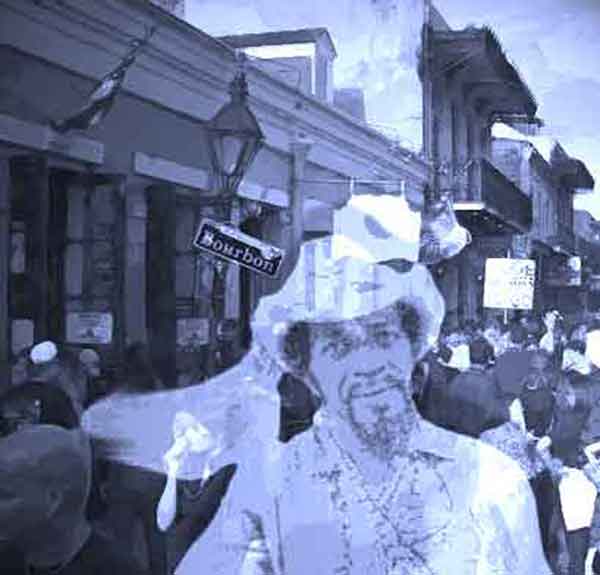
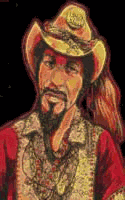
broad
smile,
dread
hair,
feathers
and
ribbons
and
braids
hanging,
sometimes
wearing
his
signature
straw
hat,
always
carrying
his
powerful
staff.
Chicken
Man
seemed
to
instinctively
read
a
person,
even
from
a
distance,
and
by
the
time
he
zeroed
in
on
someone,
he
had
already
decided
upon
just
the
right
“prescription”
in
his
mind.
That’s
how
most
people
met
the
Chicken
Man;
he
singled
them
out,
rather
than
the
other
way
around.
As
often
happens
with
people
of
great
goodwill
and
power,
a
huge
following
grew
up
around
The
Chicken
Man
in
the
1970’s
and
1980’s.
Although
he
was
practically
worshipped
by
many
and
was
accepted
as
a
truly
powerful
voodoo
priest
by
those
practicing
“true”
voodoo
–
most
prominently
Lady
Bianca
–
the
“popular”
voodoo
practitioners
treated
him
as
an
outsider.
Prince
Ke’eyama,
The
Chicken
Man,
died
in
December
1998.
“Well,
he
was
always
around
when
we
needed
him,”
says
Lance,
a
bartender
at
a
popular
Bourbon
Street
nightclub.
“It
makes
sense
to
me,
at
least,
that
he’d
be
around
now,
when
the
city
is
on
its
knees.”
Lance,
whose
occupation
keeps
him
out
late
into
the
night,
is
another
who
has
sighted
The
Chicken
Man.
“I
was
on
my
way
home,
and
I
have
to
walk
down
Bourbon
then
I
cross
over
to
Royal
and
follow
it
home,”
he
said.
“I
saw
him
from
a
distance,
standing
just
past
the
shadows
of
the
[street]lights
on
St.
Ann.
He
looked
just
like
he
always
did,
with
the
straw
hat
and
that
staff
he
always
carried,
and
it
looked
like
he
was
wearing
an
overcoat,
or
something
big
around
him.
He
looked
right
at
me
when
I
was
coming
up
on
him,
but
then
he
turned
away
and
I
looked
to
cross
the
street.
When
I
got
to
where
he
should
have
been,
he
was
gone.”
One
local
hairstylist
will
cherish
a
small
relic
she
claims
to
have
obtained
from
an
encounter
with
the
Chicken
Man.
“He
just
glowed,”
she
said.
“It
was
strange,
you
know,
but
it
was
like
he
was
looking
at
me
and
through
me
at
the
same
time.
I
was
feeling
really
depressed
–
I
had
just
broken
up
with
my
boyfriend
who
wouldn’t
move
back
here
with
me
after
the
storm
–
and
it
was
just
miserable
down
here
those
first
weeks
back.
The
night
I
saw
the
Chicken
Man
I
was
on
my
way
back
home
and
he
was
standing
against
the
wall
at
the
back
of
the
[Marie
Laveau’s]
House
of
Voodoo.
He
held
out
his
hand
and
I
was
about
to
run
to
the
other
side
of
the
street.
But
he
had
this
little
bag.”
She
pulled
out
a
pink
gris-gris
bag;
attached
to
it
was
a
holy
card
image
of
St.
Helena,
the
patron
saint
of
lost
loves.
“He
just
smiled
at
me
and
nodded,”
she
went
on.
“He
seemed
so
nice,
I
just
took
the
bag
and
thanked
him.”
Within
two
weeks
her
boyfriend
had
experienced
a
change
of
heart.
He
has
since
reunited
with
her
and
made
a
permanent
move
to
New
Orleans.
The
Chicken
Man
was
encountered
by
a
group
of
recovery
workers
out
enjoying
a
night
on
Bourbon
just
as
Hurricane
Rita
was
about
to
become
a
threat
to
western
Louisiana.
This
time
four
people
saw
him
and
his
demeanor
was
different
than
previous
sightings.
He
appeared
to
be
worried
or
preoccupied
and
he
stood
silently,
leaning
on
his
staff
and
contemplating
the
night
sky.
The
group
even
had
to
walk
around
him
to
pass
down
the
street.
They
found
this
funny
until,
several
blocks
on,
one
of
them
looked
back
and
the
Chicken
Man
had
disappeared.
New
Orleans
was
spared
a
hit
by
Hurricane
Rita
and
many
people
who
are
beginning
to
believe
the
stories
of
the
Chicken
Man
sightings
believe
that
he
has
returned
to
intercede
for
the
city,
now
that
Katrina
has
done
her
damage.
“I
personally
don’t
believe
that
we’ll
have
another
hit
like
Katrina,”
says
Deborah,
a
local
police
officer
whose
beat
is
the
French
Quarter,
“not
as
long
as
people
are
seeing
the
Chicken
Man.”
Deborah’s
mother
was
a
firm
believer
in
the
power
of
this
King
of
New
Orleans
Voodoo
and
she
can
recall
her
often
consulting
him
about
important
events
in
the
family
over
the
years.
“I
think
he’s
come
back
to
protect
us,
and
as
long
as
we’re
seeing
him,
New
Orleans
will
be
OK.”
That’s
the
feeling
of
Armando,
perhaps
the
most
devoted
of
Chicken
Man’s
present
day
followers
and
the
leader
of
a
secret
voodoo
society
based
around
Chicken
Man’s
practices.
He
greets
the
reports
of
the
growing
number
of
Chicken
Man
sightings
with
a
broad
smile,
gold
teeth
flickering.
“Oh,
I
believe
it!
I
believe
it!”
he
says,
holding
up
his
hands.
“It’s
not
the
first
time,
you
know,